
Image: howtostartanllc.com
How should you structure your business? It’s one of the first and most important decisions any entrepreneur will make. The structure you choose affects everything from taxes to liability to how you bring on partners or potential investors. Many people begin by focusing on their product, sales, or the opportunity they find in front of themselves, but the legal structure influences much of how you’ll operate. Choosing the correct one early will allow you to grow without unnecessary complexity and save you headaches in the long run.
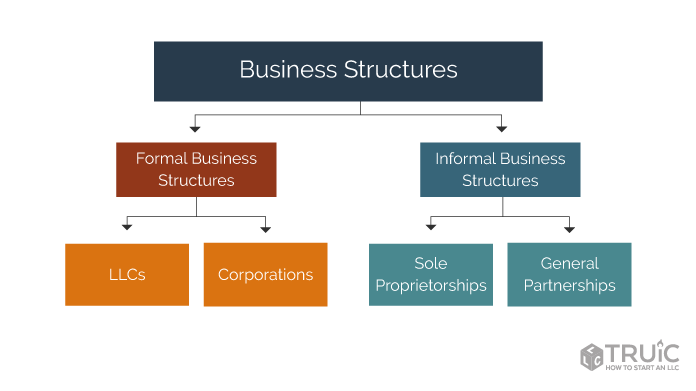
A sole proprietorship is the simplest and most common way to first structure your business. It’s inexpensive to maintain and works well for single owner operations. However, simplicity comes with trade-offs, most importantly that there is no legal separation between the owner and the business. A partnership is another common ownership structure which allows for owners to share profits, responsibilities, and decision making. Partnerships can be powerful for the right partners and require clear agreements and bookkeeping to ensure ownership allocations are made accurately.
As businesses grow, a move towards more formal structures like an LLC or corporation is often the next step. An LLC allows for more legal protection, more flexibility in taxation, and management. Electing to be an s-corporation further helps reduce taxation, but has stricter requirements. A corporation is typically used for larger or more complex businesses that seek outside investment or want to significantly scale.
Have anything else important to keep in mind? Make sure to leave a comment.
Interesting articles related to this topic:
- S Corp vs C Corp: Key Differences and Benefits | Wolters Kluwer
- 1.3 Investments in partnerships, joint ventures, and LLCs
Thank you for taking the time to view our blog.
 Partners Group LTD
Leave a comment